Contents
- 1 Why Flush Doors and Minimalist Design Are a Natural Match
- 2 The Core Elements of Flush Door Design
- 3 Flush Door Finishes That Suit Minimalist Interiors
- 4 Custom Door Design for Minimalist Spaces
- 5 Hardware Selection and Its Role in Minimalist Flush Door Design
- 6 Where Flush Doors Work Best in a Minimalist Home
- 7 Maintaining Flush Doors in a Minimalist Interior
- 8 Conclusion
- 9 FAQs
- 9.1 Q: What makes the design of flush doors particularly suited to minimalist interiors?
- 9.2 Q: Does the core construction of a flush door affect how it looks and feels?
- 9.3 Q: What finish color works best on flush interior doors in a minimalist home?
- 9.4 Q: When is a custom door design the right choice for a flush door in a minimalist space?
- 9.5 Q: Are flush doors difficult to maintain in a home with high daily use?
The design of flush doors has made them one of the most enduring choices in contemporary interior architecture. Their defining characteristic is simplicity. A flush door presents a completely smooth and uninterrupted surface on both faces with no panels, raised edges, or decorative elements breaking the plane. That simplicity is precisely what makes them so well suited to minimalist interiors where every detail is chosen deliberately and visual noise is kept to a minimum.
This guide explores the specific design qualities that make flush doors work in minimalist homes, what to look for in construction and finish, and how to make selections that serve both the aesthetic and functional requirements of a clean, considered interior.
Why Flush Doors and Minimalist Design Are a Natural Match
Minimalist interior design is built around a set of clear principles. Only what is necessary remains. Every element earns its place through function and proportion. Surfaces are kept clean and uncluttered. Visual weight is distributed with care so that no single element dominates the space.
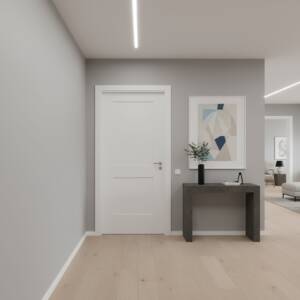
The design of flush interior doors aligns with each of these principles. Because there are no panels, moldings, or raised details, a flush door does not draw attention to itself. It functions as a transition between spaces without asserting a strong visual identity of its own. In a room where the furniture, lighting, and materials have been carefully selected to create a specific atmosphere, a flush door complements that atmosphere without competing with it.
This restraint is not the same as invisibility. A well-specified flush door in the right finish and color is a deliberate and considered element of the interior. It simply contributes to the whole rather than demanding individual recognition.
For a broader understanding of how flush doors fit into the current landscape of interior design read about why flush interior doors are in style and perfect for a home makeover.
The Core Elements of Flush Door Design
Understanding what goes into the design of flush doors helps buyers make more informed decisions about what they are purchasing and how each specification choice affects the finished result.
Surface Flatness and Profile Consistency
The defining quality of a flush door is the continuity of its surface. Both faces of the door should be completely flat from edge to edge with no visible seams, texture variation, or surface irregularities. The edges of the door, the narrow sides connecting the two faces, should be clean and consistent in width.
This level of surface consistency is easier to achieve and maintain with high-quality manufacturing. A door built from inferior materials may develop slight surface irregularities over time as the materials respond to changes in humidity and temperature. A well-constructed flush door maintains its flat profile over years of use.
Core Construction and Its Effect on Design Performance
The core inside a flush door determines much of how it performs in a minimalist interior. A hollow core door may appear visually identical to a solid core door from the outside, but the two perform very differently in practice.
A solid core door is heavier and denser. When it closes it does so with a solid and deliberate quality. In a minimalist home where details matter, the way a door sounds and feels when it closes is part of the overall experience of the space. A solid core door that closes quietly and firmly contributes to the sense of quality and calm that minimalist interiors aim to create.
The solid core also provides better sound insulation and thermal performance. In a home designed for quiet and considered living these functional qualities reinforce the experience that the design is intended to deliver. Explore the detailed case for solid construction in this guide on how solid core flush doors deliver superior soundproofing.
Surface Layer and Finish Readiness
The outer surface layer of a flush door determines how well it accepts paint and how durable the finished surface proves over time. A door covered with a quality MDF wear layer provides a smooth and consistent surface that is ideal for painting. When that surface is also factory-primed the door is ready to accept any topcoat color without additional preparation.
This combination of a smooth surface layer and factory primer is particularly valuable in minimalist interiors because the quality of the painted finish is immediately apparent. In a room with clean walls and spare furnishings a door with an uneven or poorly adhered paint surface becomes visible in a way it might not in a busier interior. Starting with a high-quality primed surface eliminates this risk.
Flush Door Finishes That Suit Minimalist Interiors
Color and finish selection is where flush interior doors make their most visible contribution to a minimalist interior. The choices made at this stage determine whether the door integrates seamlessly, creates a deliberate contrast, or becomes a visual focal point.
White and Near-White Finishes
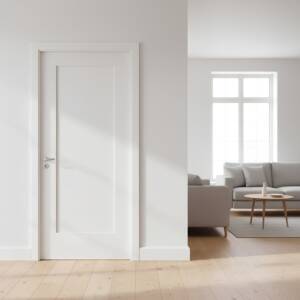
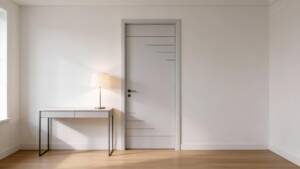
Painting flush doors in white or an off-white tone is the most common approach in minimalist interiors and for good reason. White doors against white or light-toned walls create a near-seamless transition between wall and door that reinforces the sense of openness and continuity. The door frame and door become part of the same visual field rather than separate elements.
This approach works particularly well in smaller spaces where the goal is to make rooms feel as large and unobstructed as possible. A white flush door in a white-walled room contributes to a spatial quality that feels both calm and expansive.
Dark and Contrasting Finishes
At the opposite end of the spectrum, a flush door painted in a deep charcoal, navy, or forest green against lighter walls creates a bold and deliberate contrast. This approach treats the door as a feature element within an otherwise restrained interior. The flat surface of a flush door is ideal for this treatment because the solid unbroken color reads as a confident design statement without the visual complexity that a paneled door would introduce.
This finish choice suits minimalist interiors that want one point of visual emphasis rather than pattern or ornamentation. The door becomes the accent rather than the room needing additional decorative elements to create interest.
Matching Walls for a Seamless Effect
A third approach, painting the door to match the wall color exactly, creates a nearly invisible door that disappears into the surface of the room. This technique is popular in high-end minimalist interiors where the goal is to remove all visual interruption from the wall plane. The eye travels across the room without being stopped by the rectangle of a door.
For guidance on making color decisions that support the specific function and atmosphere of each room read about what color interior doors should be based on room function.
Custom Door Design for Minimalist Spaces
Standard door dimensions cover the majority of interior openings in residential construction. However, minimalist homes frequently push standard proportions in pursuit of specific spatial qualities. Taller ceilings, wider openings, and bespoke room configurations sometimes call for custom door design rather than standard sizing.
A custom flush door can be specified to any height or width that the opening requires. In a home with higher than standard ceiling heights, a taller door maintains the visual proportion that a standard-height door would not achieve. A taller flush door also reinforces the sense of verticality and generosity of space that minimalist interiors often work to amplify.
Custom door design also allows for precise control over the edge profile and frame integration. In some minimalist interiors the goal is to eliminate the visible door frame entirely, creating a flush wall-to-door transition with no visible casing. Achieving this requires careful coordination between the door specification, the frame detail, and the wall finish. A custom door built to exact tolerances makes this level of precision easier to achieve.
For more on how custom specifications contribute to cohesive interior design read how customizable interior doors can elevate your home’s design.
Hardware Selection and Its Role in Minimalist Flush Door Design
In a minimalist interior the hardware on a flush door is the only decorative element the door presents. Because the surface itself is unadorned, the handle, hinges, and any locking mechanism become the point of focus. Selecting the right hardware is therefore an important part of the overall door design.
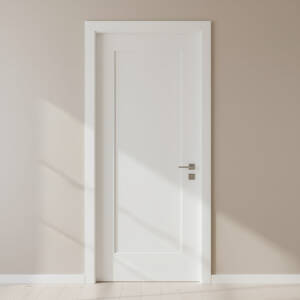
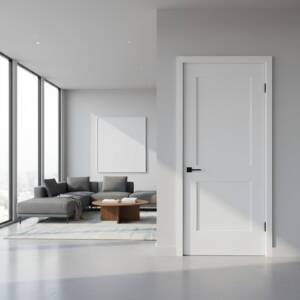
Lever handles in brushed steel, matte black, or polished chrome are common choices in minimalist interiors because they are functional in form without unnecessary ornamentation. Flush-pull handles, which sit flat within the face of the door, take this restraint even further by eliminating any projecting element from the door surface entirely.
Concealed or semi-concealed hinges reinforce the clean appearance of a flush door by reducing the visible hardware at the hinge edge. When combined with a lever or flush-pull handle the result is a door with minimal visible metalwork and maximum surface continuity.
Where Flush Doors Work Best in a Minimalist Home
Not every opening in a minimalist home requires the same approach. Understanding where flush interior doors deliver the most value helps buyers prioritize their selections effectively.
Living areas and hallways benefit most from flush doors because these are the spaces where visual continuity across a larger field of view matters most. A flush door at the end of a hallway or opening off a main living space maintains the clean lines of the surrounding interior without interruption.
Bedrooms and bathrooms benefit from flush doors for reasons of both aesthetics and function. The smooth surface is easy to clean and maintain. The solid core construction, where specified, provides the sound insulation that these private spaces require. In a bedroom a flush door that closes quietly and seals well contributes directly to the restful environment the room is designed to provide.
Home offices and studies benefit from the acoustic performance of a solid core flush door as well as the visual calm that the unadorned surface provides. A workspace that is visually simple supports focus in the same way that a quiet environment does.
For a detailed room-by-room approach to door selection read types of interior doors and how to choose the right one for each room.
Maintaining Flush Doors in a Minimalist Interior
Because flush doors have no recesses or panels, maintaining their appearance is straightforward. The smooth surface can be wiped down with a soft damp cloth and a mild cleaning solution. This ease of cleaning is itself a quality that suits minimalist living, where every element of the home should be easy to maintain and free of unnecessary complexity.
When the painted surface shows signs of wear it can be touched up or repainted without difficulty. The flat profile means that repainting a flush door is faster and more consistent than refinishing a paneled door with multiple surface levels and angles. For detailed guidance on achieving a clean and lasting paint result read how to paint interior doors the right way.
Conclusion
The design of flush doors makes them the most coherent choice for minimalist interiors precisely because their defining quality, a clean and uninterrupted surface, mirrors the defining quality of minimalist design itself. When specified with solid core construction, a quality surface layer, and factory primer, flush interior doors deliver both the visual simplicity and the functional performance that a well-designed minimalist home requires.
Whether the project calls for a standard size in a matching wall finish or a custom door design in a bold contrasting color, the flush door profile provides the foundation on which those decisions can be built with confidence.
Explore Evolux Doors‘ full range of flush doors to find the right specification for your project. To review available sizes and finishes request our product catalogue or submit a wholesale inquiry for project-scale orders today.
FAQs
Q: What makes the design of flush doors particularly suited to minimalist interiors?
A: Flush doors have a completely smooth and uninterrupted surface with no panels or decorative elements. This restraint complements minimalist design principles by allowing the door to transition between spaces without drawing visual attention. The door supports the overall interior without competing with other design elements in the room.
Q: Does the core construction of a flush door affect how it looks and feels?
A: The surface appearance of a flush door is the same regardless of core type, but the feel when opening and closing differs significantly. A solid core flush door is heavier and closes with a firm and quiet quality. In a minimalist interior where material quality is part of the experience, that difference is noticeable and meaningful.
Q: What finish color works best on flush interior doors in a minimalist home?
A: White and near-white finishes create a seamless transition between door and wall that reinforces spatial continuity. Darker contrasting finishes make the door a deliberate focal point. Matching the door exactly to the wall color creates a near-invisible effect. The right choice depends on whether the design goal is integration, contrast, or visual elimination of the door.
Q: When is a custom door design the right choice for a flush door in a minimalist space?
A: Custom door design is appropriate when the opening dimensions fall outside standard sizes, when ceiling heights call for a taller door to maintain proper visual proportion, or when the design requires a specific edge detail for frameless installation. Custom sizing ensures the door fits the space precisely without visual compromises.
Q: Are flush doors difficult to maintain in a home with high daily use?
A: Flush doors are among the easiest interior doors to maintain. Their smooth uninterrupted surface can be wiped clean with a damp cloth and mild cleaner without needing to work around recesses or panel edges. Repainting is also straightforward because the flat profile accepts paint evenly and consistently without the complexity of a paneled door surface.